
 By Ata Ur Rahmen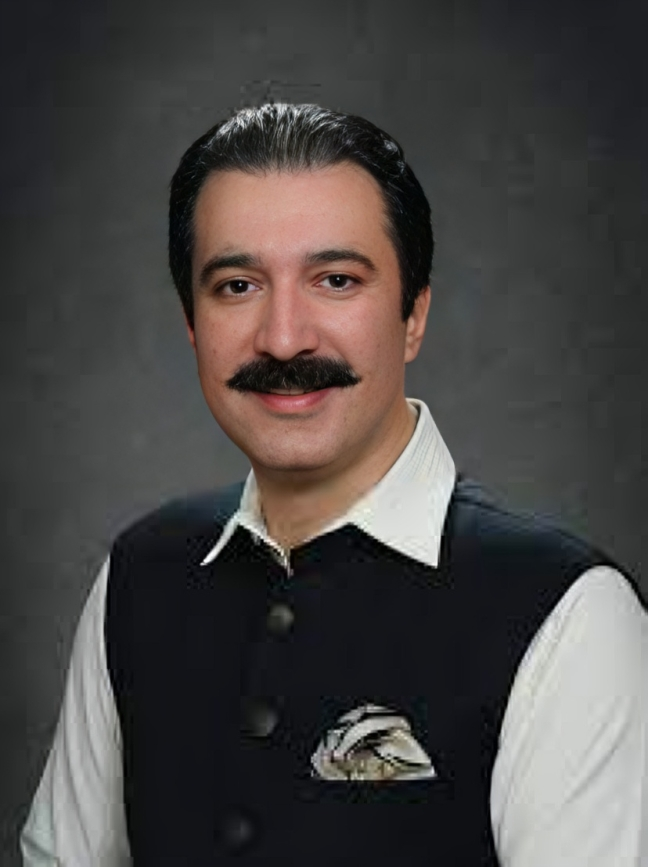
AJK No-Confidence Motion: Assembly Overthrows PM Anwarul Haq
The AJK no-confidence motion passed by the Azad Jammu and Kashmir Legislative Assembly on Monday marked one of the most significant political developments in the region’s recent history. The motion resulted in the removal of Prime Minister Chaudhry Anwarul Haq and paved the way for Pakistan People’s Party (PPP) leader Faisal Mumtaz Rathore to assume office as the 16th Prime Minister of AJK. With 36 votes in favour in the 52-member House—and only two votes against—the motion was carried with an overwhelming majority, reflecting a major shift in the power dynamics of AJK politics.
Nine members remained absent from the session, which was presided over by Speaker Chaudhry Latif. Before the Assembly proceeded with the vote, outgoing Prime Minister Anwarul Haq delivered a lengthy farewell speech, defending his governance decisions and criticising the political narrative that led to the no-confidence resolution. Following the vote, he and five allied members walked out of the Assembly hall.
Political Legacy Behind Faisal Mumtaz Rathore’s Rise
Faisal Mumtaz Rathore’s ascension during the AJK no-confidence motion is strongly tied to his longstanding political heritage. Born on April 11, 1978, in Rawalpindi, Rathore hails from one of Azad Kashmir’s most influential political families. His father, Mumtaz Hussain Rathore, was a towering figure in AJK politics, serving as prime minister, speaker, leader of the opposition, and senior minister over different political eras. His mother, Begum Farhat Rathore, also enjoyed a prominent political career and headed the PPP Women’s Wing.
Rathore’s early education took place in Rawalpindi, after which he graduated from the University of the Punjab. His political career formally began when he contested the 2006 general elections from LA-17 Haveli Kahuta. Although unsuccessful in his first attempt, he remained active in party organization. In 2011, he secured his first victory as a Member of the Legislative Assembly on a PPP ticket and later held ministerial portfolios for Education and Electricity.
In 2016, he was arrested in a politically charged case but was later cleared of all allegations. Despite political challenges, Rathore’s stature within the PPP continued to grow. On March 23, 2017, he was appointed Secretary-General of PPP AJK—a position he still holds. He was re-elected in 2021 and played a vibrant role as part of the opposition benches.
In 2023, Rathore joined the coalition government as Minister for Local Government and Rural Development, where he participated in negotiations with the Public Action Committee. Known for his calm temperament, strategic thinking, and non-confrontational politics, he maintains strong relationships across political, civil, and military sectors.
Ahead of the AJK no-confidence motion, Rathore voluntarily resigned from his ministerial post, saying he wished to contest the prime minister’s slot with “full transparency.” He stated that regardless of the outcome, he would continue to fulfill his duties as an MLA.
Anwarul Haq’s Defiant Farewell Before the Vote
Chaudhry Anwarul Haq’s final speech before the AJK no-confidence motion vote was a mix of self-defense, criticism, and political reflection. He questioned why he alone was being blamed for governance failures, insisting that the cabinet shared responsibility. “Is it possible that only one man destroyed the constitution and administrative structure?” he asked.
Haq highlighted that the Assembly had earlier pushed him to dissolve the House by February 15, warning that such a move could have led to instability or even forceful removal. He thanked cabinet members for “signing my freedom certificate,” a remark delivered with a hint of humour.
He also addressed security concerns, stating that amid protests he was advised to use an armoured vehicle but chose not to. Haq recalled speaking against Indian Prime Minister Narendra Modi from the Assembly floor and complained that his criticism had been misrepresented as an attack on India itself. He stressed that national defense and strong armed forces were essential for AJK’s political stability.
Despite political tensions, Anwarul Haq concluded his speech with goodwill, saying: “If Faisal Mumtaz Rathore was elected, I would have voted for him.” He then left the Assembly with five members.
Former Prime Ministers React Strongly to the Shift
The AJK no-confidence motion also drew sharp reactions from senior political figures. Former Prime Minister Farooq Haider accused national leaders Asif Ali Zardari and Shehbaz Sharif of engineering the political transition. Another former prime minister, Sardar Abdul Qayyum Niazi, blasted the outgoing government’s lack of performance, saying local representatives were “stranded for two and a half years.”
Latif Akbar added that although PML-N members supported Rathore in the vote, they would continue to operate from the opposition benches.
Stay Connected with Asal Pakistan for latest updated.